Individual rehabilitation
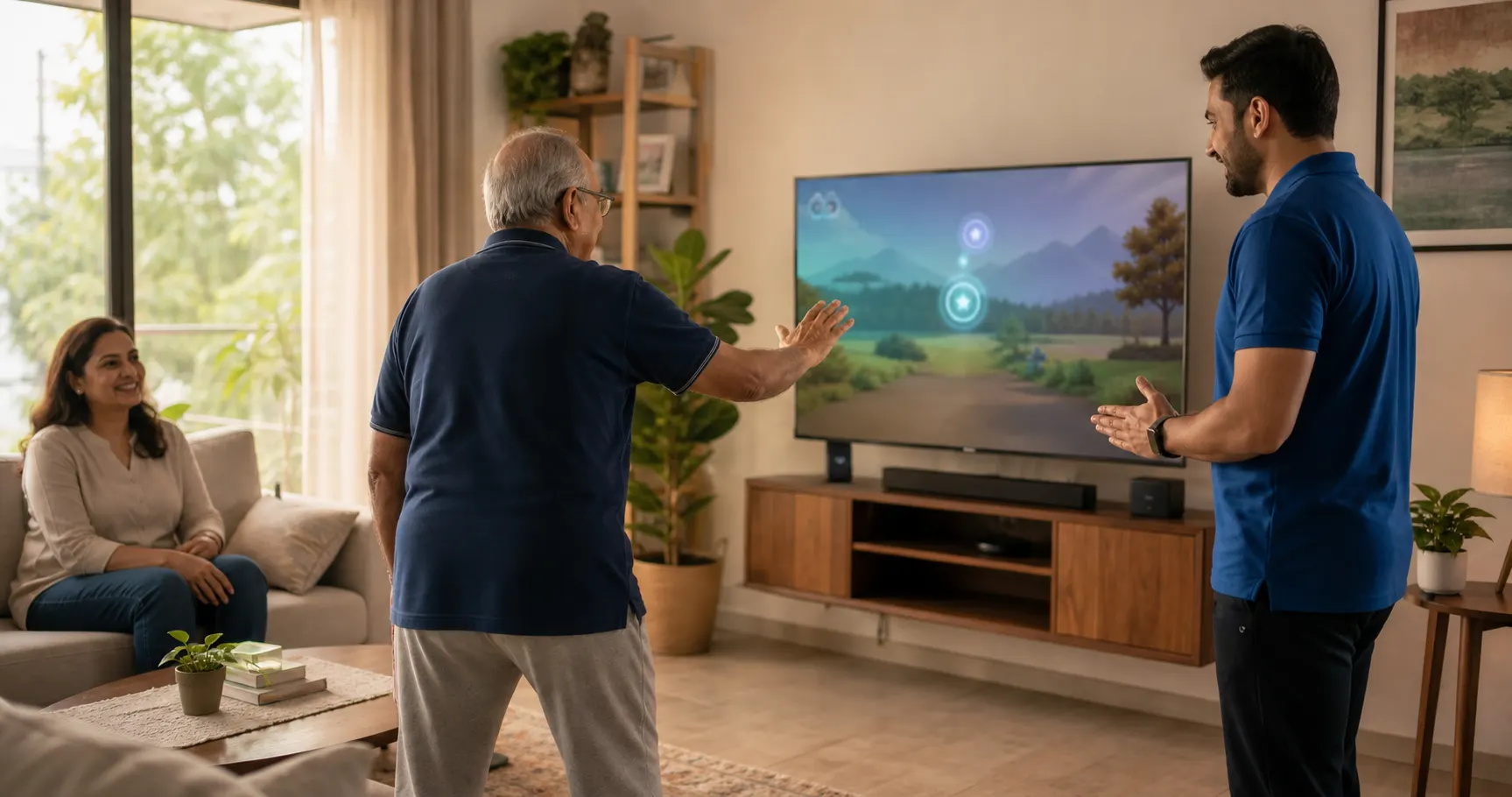
A therapist may work on movement, strength and transfers, adapting the tasks to the muscles affected and your current ability.

Brain & movement
Weakness, fatigue or altered sensation after nerve illness can make ordinary tasks difficult. This pathway considers rehabilitation after Guillain-Barré syndrome, including AMAN, and selected peripheral neuropathies, guided by the diagnosis and your treating team’s assessment.
The starting point
People who are medically stable after Guillain-Barré syndrome or have a diagnosed peripheral neuropathy with functional difficulties. Causes, severity and recovery patterns differ, so neurological advice and the available level of rehabilitation support determine suitability.
Make it personal.
02 / Your planKeep it connected.
03 / Your next stepReview it together.
Your programme is shaped around your health, preferences and clinical needs.
A therapist may work on movement, strength and transfers, adapting the tasks to the muscles affected and your current ability.
Practice balances activity with rest and can include ways to manage daily tasks, fatigue or the need for assistance.
Changes in weakness, sensation, pain or participation are shared with the responsible clinician rather than treated as exercise problems alone.
Your journey
Review the neurological diagnosis, hospital course, current symptoms and any breathing or other medical precautions.
Set realistic functional goals and confirm the required therapy, supervision and rest.
Practise selected tasks at a tolerable level, using adaptations and assistance when necessary.
Reassess strength and daily function, with clinical review for deterioration or new symptoms.
The right measures help the team understand whether the plan is useful and what should happen next.
How measurement worksMeasures are chosen by the clinician. These are examples, not a standard test package.
A team that fits your needs
The centre confirms the professionals involved and their availability.
Working with your hospital
Acute Guillain-Barré syndrome requires hospital assessment and treatment. Rehabilitation may follow as the person stabilises and the treating team recommends it. A continuing plan needs the discharge information, current precautions and appropriate supervision, with a clear route back to medical care if symptoms change.
Our referral approachNo. AMAN, acute motor axonal neuropathy, is a form of Guillain-Barré syndrome. Other peripheral neuropathies have different causes and needs, which your neurologist must establish.
Recovery after GBS varies and may be prolonged. A programme cannot promise when strength or independence will return; goals and support should be reviewed as your condition changes.
Increasing weakness, breathing difficulty or swallowing problems require urgent medical assessment. Routine rehabilitation is considered when the treating team confirms that the condition and setting are appropriate.
Rehabilitation supports recovery and adaptation; it does not cure GBS or every neuropathy. New or worsening weakness needs medical review. Participation depends on clinical suitability and the required team being available.
Start a conversation
Find your local centre and discuss what support may be right for you.