
Musculoskeletal & orthopaedic health
Orthopaedic rehabilitation
An injury or operation can turn familiar tasks into new challenges. Continue from your hospital team’s plan with rehabilitation focused on moving around home, rebuilding capacity and returning to the parts of life you value.
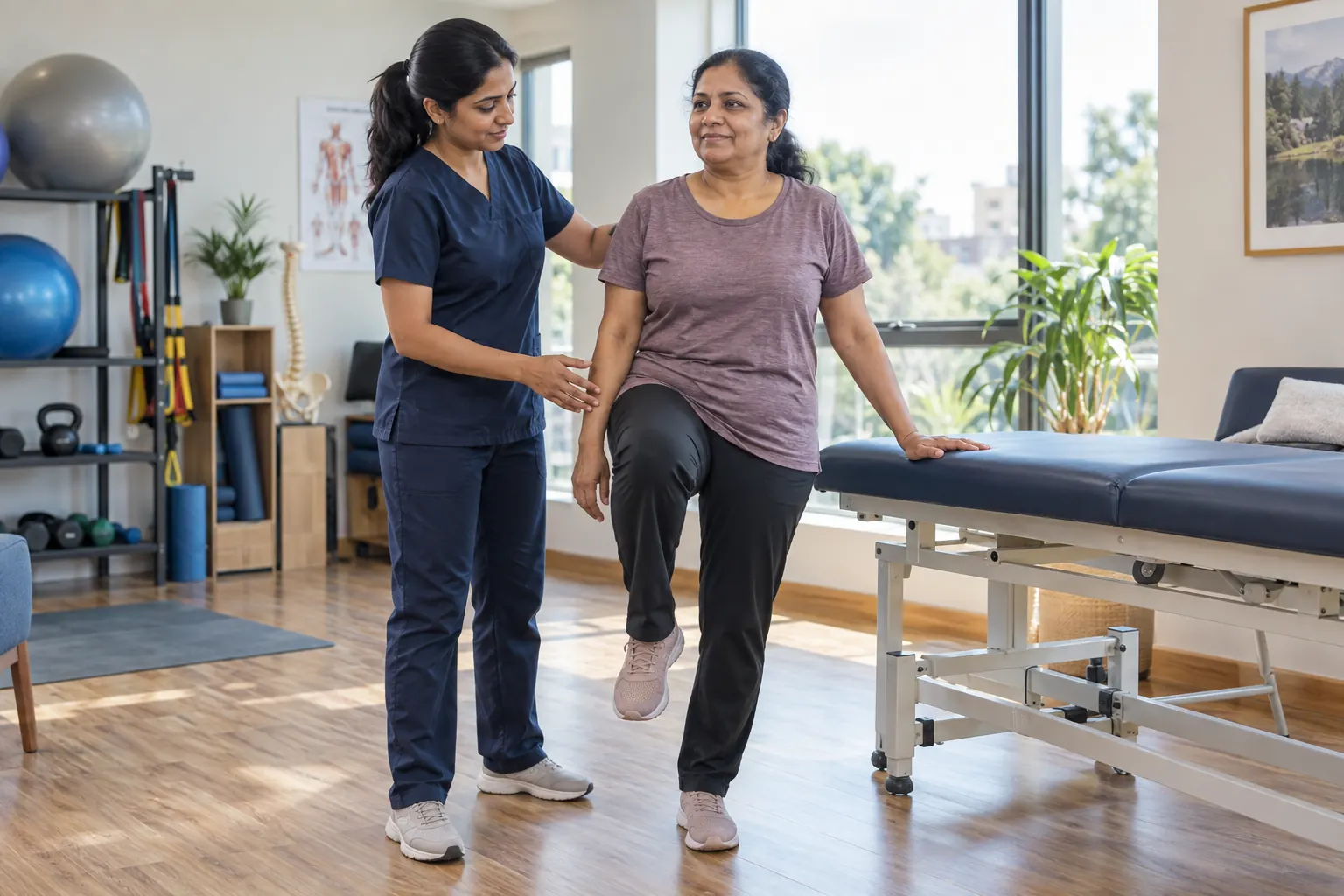
A connected care plan.

From treatment to everyday life
Home again. Now, what comes next?
After an operation or injury, the next milestone may be getting out of a chair, managing the bathroom or walking to the gate. Rehabilitation starts with your treatment plan and makes room for the questions that appear when life resumes.
I am preparing for hospital treatment
Bring the operation plan and your surgical team’s advice. Discuss what preparation is appropriate and the help you may need afterwards, including travel, family responsibilities and access at home.
I have recently come home
Begin with your discharge instructions and current abilities. Ask which movements are allowed, how much help you need and who to contact if you are concerned. The centre confirms whether it can provide suitable continuing support.
I want to return to work or an activity I value
Name the task and what it involves. Your physiotherapist and treating team can help break that goal into appropriate steps. Your coach supports the routine around them, with clinical review guiding progression.
The starting point
Connect your recovery plan with the life you are returning to.
Adults preparing for, or recovering from, orthopaedic treatment, including joint replacement, a fracture or a soft-tissue injury. Your surgeon’s or treating clinician’s advice, stage of healing and support needs determine when and where rehabilitation is suitable.
Make it personal.
02 / Your planKeep it connected.
03 / Your next stepReview it together.
What would support look like for you?
A clinician guides care. A coach helps you carry the plan into daily life. Your centre agrees the support available.
Care that fits your everyday life.
A shared plan, shaped around the person and reviewed by their clinician.

Where would you like to begin?
Begin with the right precautions+
Your discharge advice and treatment plan set the starting point. The team checks restrictions on loading, joint movement, braces and other precautions with your treating professionals before planning activity.
Rebuild useful movement+
Physiotherapy can work towards the movements your recovery allows, such as standing, walking or using the arm in daily tasks. The level of assistance and progression should reflect healing and clinical review.
Make the return home workable+
Bring questions about getting around, household responsibilities and returning to work. Your coach supports the agreed routine and helps organise concerns for the care team, including time, travel and care costs.
What would you like to know next?
What would the first steps be?↗
- Bring your recovery plan
Share the treatment or discharge summary, relevant reports and current restrictions. Confirm who is responsible for clinical follow-up and which setting can provide the support you need.
- Make the next step specific
Choose a meaningful near-term goal within your precautions. Agree the professional input, home practice and review arrangements needed to work towards it.
- Practise at the right stage
Build on the activities your clinical team has allowed. Progress is individual; a new task or heavier load should follow appropriate review rather than a fixed calendar.
- Reconnect with everyday life
Review function and the activities you hope to resume. Work, driving, sport and more demanding tasks may each need specific advice or clearance from your treating team.
How would progress be reviewed?↗
Your clinician chooses measures relevant to your goals. Examples may include:
- Assistance needed for selected everyday tasks
- Relevant joint movement, strength or walking measures
- Symptoms, confidence and progress towards goals agreed with your treating team
Who could support me?↗
- Treating orthopaedic surgeon or rehabilitation physician
- Physiotherapist
- Coach for everyday goals and care coordination
- Occupational therapist, nutrition or psychological support when indicated
Your centre confirms which professionals are involved and how you will meet.
How does my coach help me keep going?↗
Your coach helps turn the agreed plan into everyday action: manageable goals, workable routines and conversations about what is getting in the way. You agree how to stay in touch and bring questions back to the care team. Medical decisions remain with your clinician.
Meet the coaching roleCan we discuss money or work pressures?↗
Money worries can be part of the wellbeing conversation, including care costs, household responsibilities and pressures at work. Your coach can help you organise priorities and explore practical money habits. This is financial wellbeing education, not advice on financial products.
Explore financial wellbeing supportHow does this fit my existing care?↗
Before planned surgery, discuss whether preparation is appropriate with your surgical team. After discharge, rehabilitation continues from their instructions and follow-up arrangements. Concerns about healing, symptoms or progress should return to the responsible clinical team; MiMo360 does not replace surgical care.
Our referral approachAn interactive service guide. Your choices stay on this page.
Your questions, answered.
Can I start before a planned joint replacement?
Ask your surgical team whether preparation is suitable for your operation and health. The conversation can cover daily function, appropriate activity and what support you may need after discharge. There is no single preparation routine for every procedure.
Will I need to change my surgeon or hospital?
No. Your existing team remains responsible for your treatment and follow-up. Continuing rehabilitation should use their guidance and, with your consent, share relevant questions or observations back to them.
What if I still need a walking aid or help at home?
Tell the centre before arranging a visit. The team needs to understand your current mobility, assistance and access needs to decide whether it can offer the appropriate setting. Do not stop using prescribed aids or change loading restrictions without professional advice.
Clinical perspective
Recovery times and outcomes vary. Wound care, medicines, weight-bearing restrictions and return-to-activity clearance remain with the appropriate clinicians. New chest pain or breathlessness needs emergency help. Your centre confirms whether the required supervision and professional support are available.
Start a conversation
Start with your story.
Find your local centre and discuss what support may be right for you.