Meaningful movement practice
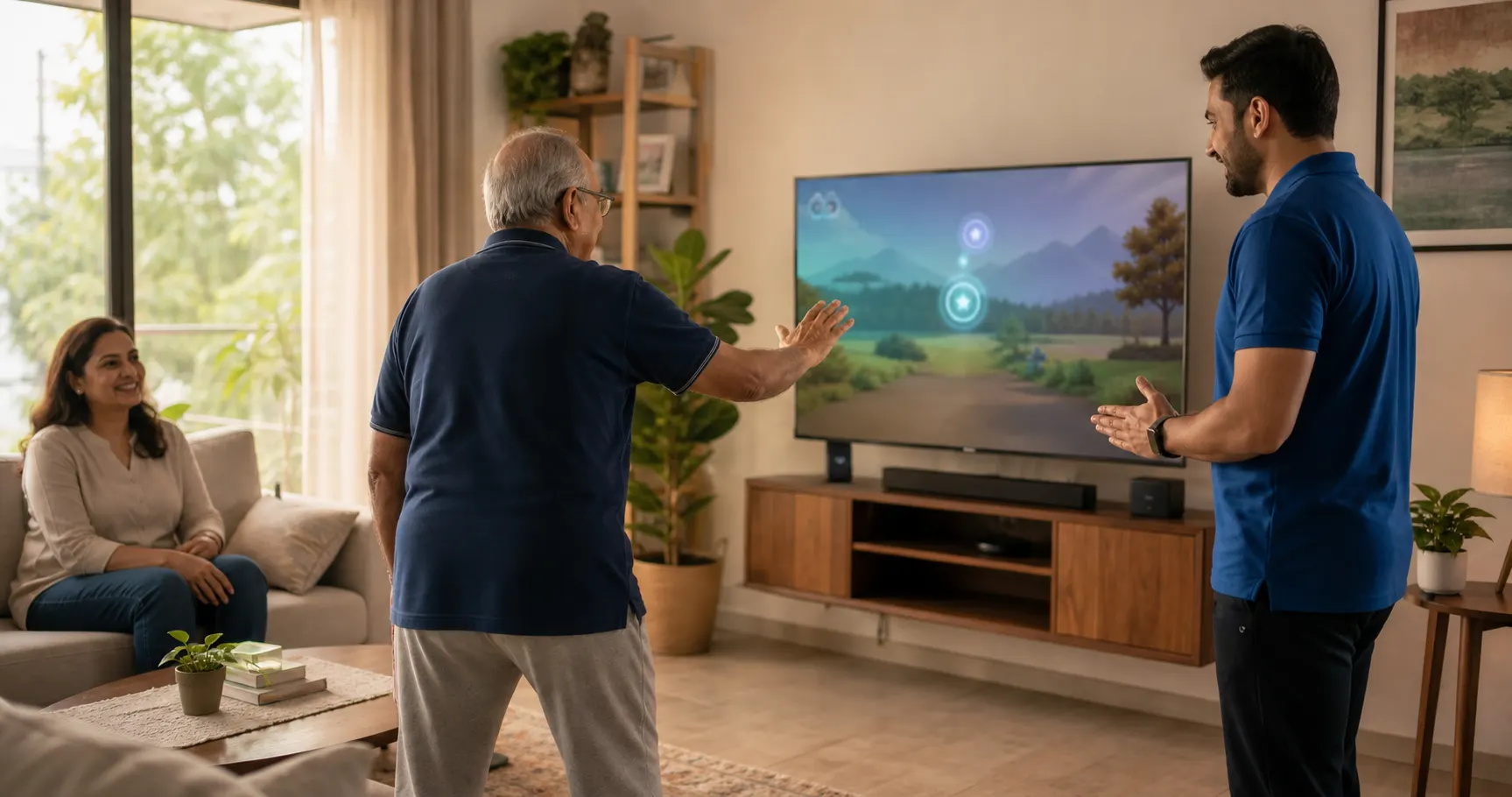
Practice can focus on reaching, using the hand, standing, transfers or walking, according to your assessment and goals.

Brain & movement
Recovery after stroke can involve movement, communication, thinking and everyday independence. This pathway starts with what matters to you, connecting appropriate rehabilitation practice with family support and regular review by the professionals responsible for your care.
The starting point
Adults recovering from an ischaemic or haemorrhagic stroke who are medically stable and need continued rehabilitation. The assessment considers movement, communication, cognition, fatigue and the support available at home, alongside the treating team’s recommendations.
Make it personal.
02 / Your planKeep it connected.
03 / Your next stepReview it together.
Your programme is shaped around your health, preferences and clinical needs.
Practice can focus on reaching, using the hand, standing, transfers or walking, according to your assessment and goals.
Relevant therapy input may address dressing, communication, attention or returning to valued activities, with rest and adaptation where needed.
Caregivers can learn agreed ways to assist practice and everyday tasks, while raising concerns with the responsible professionals.
Your journey
Review discharge information and assess the daily activities, communication and movement that need support.
Agree personal goals, therapy priorities and the supervision needed to practise appropriately.
Repeat meaningful tasks with suitable assistance, rest and caregiver involvement where helpful.
Reassess function and goals, then progress, adapt or request further specialist input.
The right measures help the team understand whether the plan is useful and what should happen next.
How measurement worksMeasures are chosen by the clinician. These are examples, not a standard test package.
A team that fits your needs
The centre confirms the professionals involved and their availability.
Working with your hospital
Stroke rehabilitation begins within specialist care and may continue after discharge. Your discharge plan, current abilities and home circumstances guide the next setting. MiMo360 support should connect with that plan, preserving therapy priorities and escalating new concerns instead of restarting your care without context.
Our referral approachNeeds can continue or change over time. A rehabilitation review can identify whether further work on personal goals, adaptations or caregiver support is appropriate for your current situation.
That depends on your needs and preferences. If assistance is required, the plan should explain who will help and what they need to learn before home practice.
No. Suitable tools may support practice or record observations. A qualified professional selects and reviews rehabilitation, and game performance alone does not establish recovery in daily life.
Recovery varies, and no degree or timeline of recovery is guaranteed. Clinical suitability and the necessary team must be confirmed. New stroke symptoms require emergency care, not a routine appointment.
Start a conversation
Find your local centre and discuss what support may be right for you.