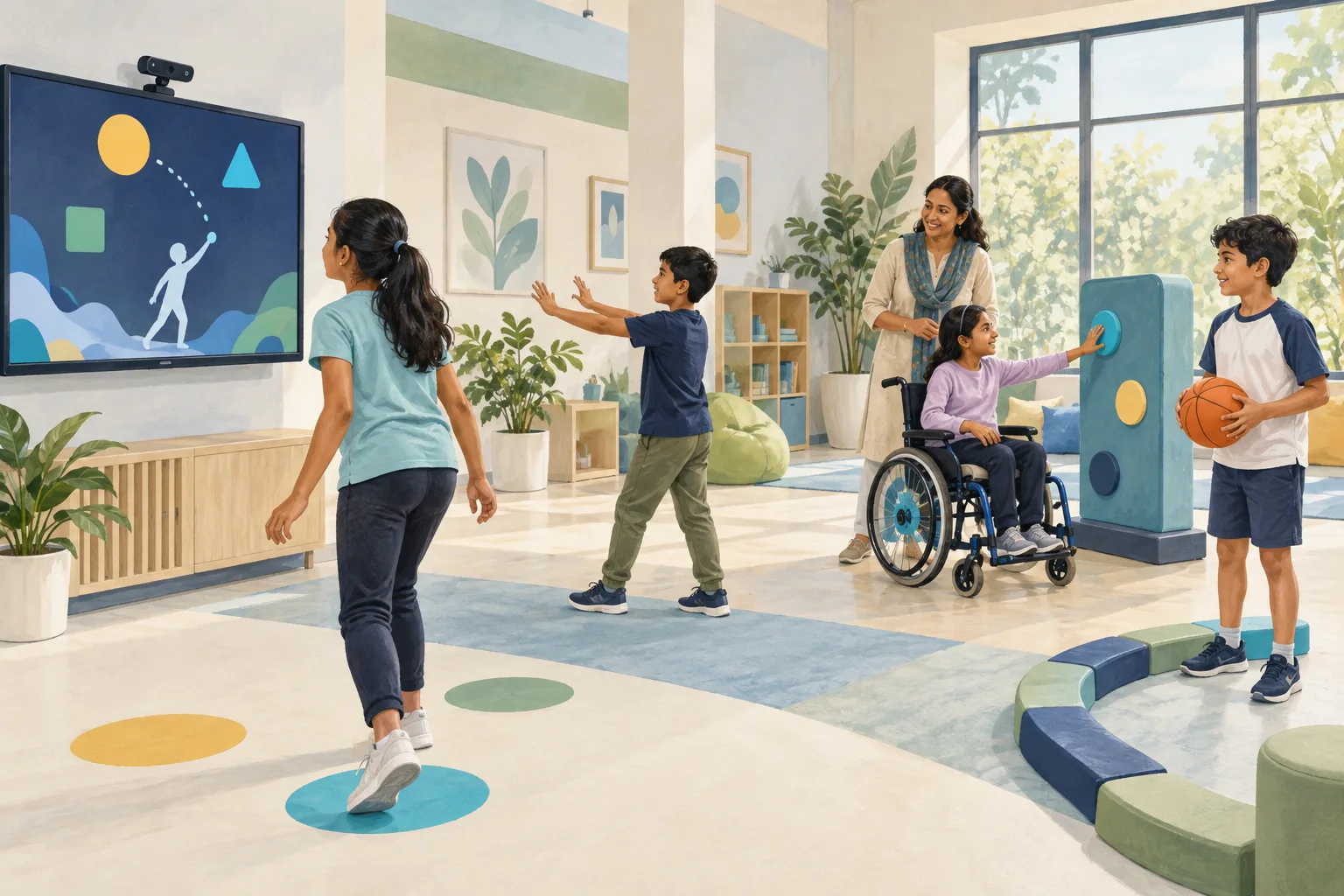
Move & participate
Balance, rhythm, cooperative games and adapted challenges offer different ways to join in.

MiMo360 for Schools
A whole-child wellbeing programme connecting supervised movement, practical assessment and human support. Help children participate, understand their progress and take a useful next step, together with their school and family.
Movement. Wellbeing. A useful next step.
For the child who loves sport, the child who prefers a quieter challenge, and everyone finding their own way.
Balance, rhythm, cooperative games and adapted challenges offer different ways to join in.
Reviewed observations connect an individual activity goal with a practical next step.
Explore routines, emotional expression and food habits with appropriate human guidance.
Give teachers and families a clearer way to discuss participation and follow through.
Explore what we work towards, with the school, the family and the people who can help.
A shared circle around the child.
The child’s goals, preferences and comfort guide the conversation.

Bring activities, staff preparation, reviewed feedback and follow-through into an agreed timetable. Work alongside existing PE, teaching and wellbeing teams.
Start with a personal activity goal. Give families understandable feedback and a manageable next step, while leaving room for enjoyment, confidence and the child’s own voice.
A concern begins with context and a conversation. Scheduled wellbeing, nutrition or professional input may contribute within the agreed school programme. Qualified professionals make clinical decisions.
What would you like to know next?
Assessment begins with a child taking part. Observe the activity in context, review what the information can tell us and choose a manageable next step.
An activity observation is not a diagnosis or a measure of a child’s overall ability. Formal developmental or medical assessment requires an appropriate qualified professional and separate arrangements.
Reviewed feedback, practical activity ideas and scheduled conversations can help families follow through. The school agreement sets what is included, how families take part and when follow-up happens.
An interactive service guide. Your choices stay on this page.
From observation to action
A useful assessment should help someone decide what to do next. Human review keeps the child and the context in view.
Try a supervised activity with a goal that fits the child.
Consider the task, context and quality of the observation.
A responsible person interprets what is useful and what is uncertain.
Agree the next activity or an appropriate support conversation.
Return to the goal and review the child’s experience over time.
An example of the questions reviewed feedback should answer.
Example structure, not a pupil recordAn activity observation is not a diagnosis or a measure of a child’s overall ability. Formal developmental or medical assessment requires an appropriate qualified professional and separate arrangements. Poor-quality capture should not produce a score or a judgement about a child.
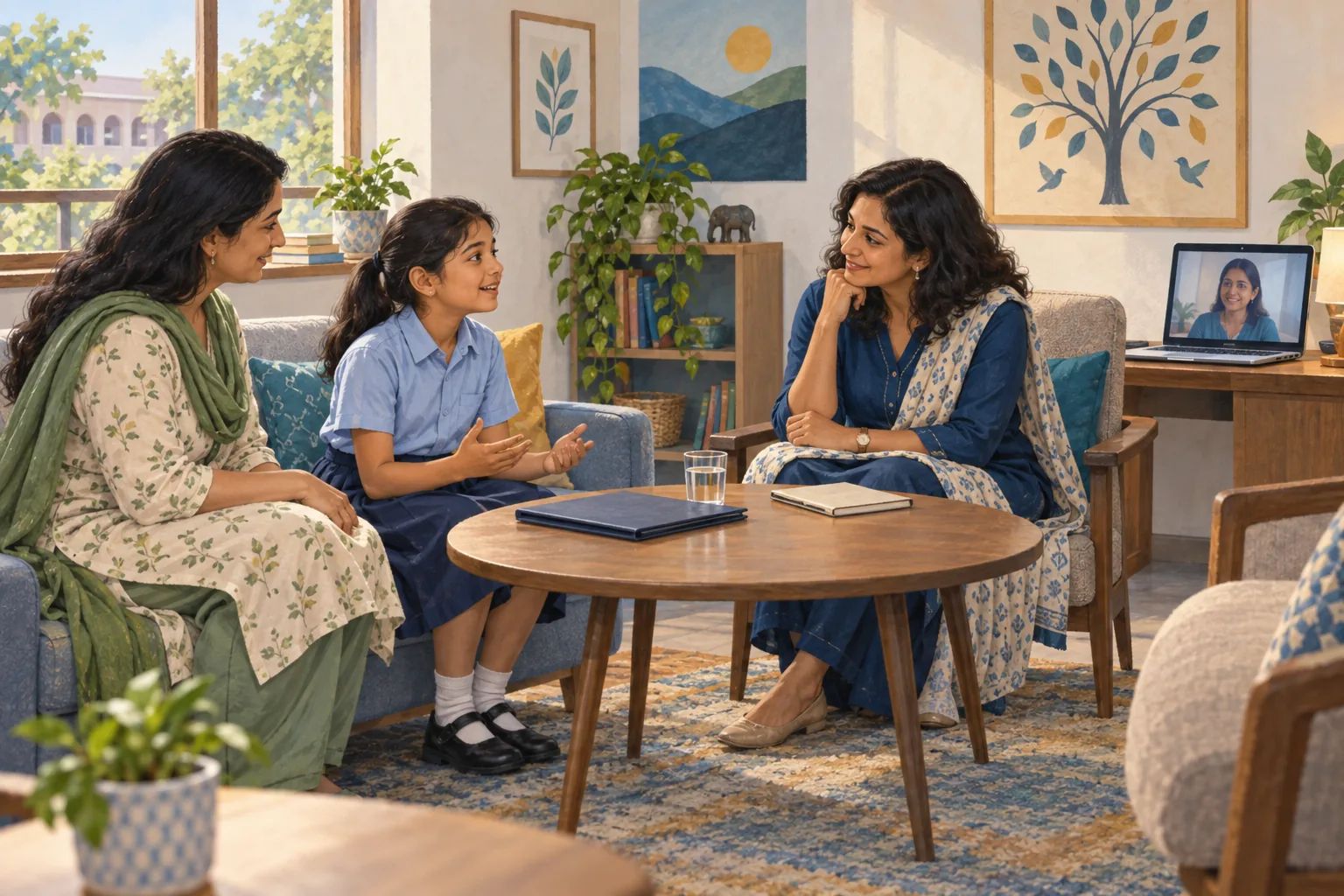
A child’s experience goes beyond an activity score. School and family context can guide conversations about routines, wellbeing and appropriate support.
Scheduled counselling or psychology, nutrition guidance and paediatric input when indicated can form part of an agreed support network. They are not a promise that every specialist is present at the school.
Individual consultations, formal assessments and therapy are separately arranged. Qualified professionals remain responsible for clinical decisions.
Each school programme is agreed before launch. Activities, timetable, professional input and additional services depend on the school’s needs and delivery capacity.
Discuss a school programmeDiscuss the pupils, priorities, timetable and existing school support. Agree the programme scope and a clear point of contact.
Review space, accessibility, supervision, staff training and permissions. Demonstrate how a full class would participate.
Run the agreed activities, review observations and coordinate school and family communication. Confirm how concerns reach the right person.
Look at participation, pupil experience, teacher workload and service quality. Use the findings to agree what should change or grow.
Optional extensions give pupils more ways to explore. Each needs its own scope, appropriate supervision, tools and budget.
Explore movement through activities such as badminton, football or throwing. Advanced analysis needs suitable tools, task validation and qualified coaching. No promise of selection or sporting achievement.
Design inclusive games, build age-appropriate coding or sensor projects, and document what works, fails and changes. Student projects use suitable practice data, with health records kept outside the lab.
Older pupils can explore real needs, test prototypes and explain costs and evidence. Credit stays visible; research, publicity or commercial use needs separate review and appropriate student and guardian agreement.
Built around people. Connected by Zeuron.
Zeuron develops the technology infrastructure, MiMo is the compute hardware within that foundation, and MiMo360 brings the programme and human support together. Tools used in a school are selected and confirmed for that setting.
Meet the technology backboneThe approach is inclusive. A school agrees age-appropriate activities and adaptations for its pupils, including children who prefer cooperative play, rhythm or gentle challenges to competitive sport.
The proposed sessions centre on supervised physical activity. A display can guide a game or give feedback. A school demonstration should show actual active time, waiting time and how the whole class takes part.
No. Game observations do not establish a diagnosis, intelligence or future potential. A concern requiring formal assessment belongs with an appropriately qualified professional, with the family involved.
No. Shared professional input follows an agreed schedule. Individual consultations, formal assessments and therapy are separately arranged; the family can choose whether to pursue them.
Before launch, the school and MiMo360 need to agree permissions, access to records and private feedback. Reports should support individual progress, without public rankings. Photographs, research and showcases require separate consideration and permissions.
A proposal follows a discussion of the cohort, timetable, staffing and scope. Optional labs, advanced sports work and individual clinical services are agreed separately. Contact us to discuss a school-specific proposal.
Goals describe what the programme works towards, not demonstrated MiMo360 outcomes or guaranteed improvements. Activities complement school teaching and wellbeing support. They do not replace clinical assessment or treatment.
For school leaders & teams
Tell us about your school, the pupils you want to support and the priorities you have in mind.