
Musculoskeletal & orthopaedic health
Musculoskeletal health
When back, neck or joint pain changes your day, start with what has become difficult. MiMo360 connects assessment, physiotherapy and coaching around the movements and routines you want to regain.
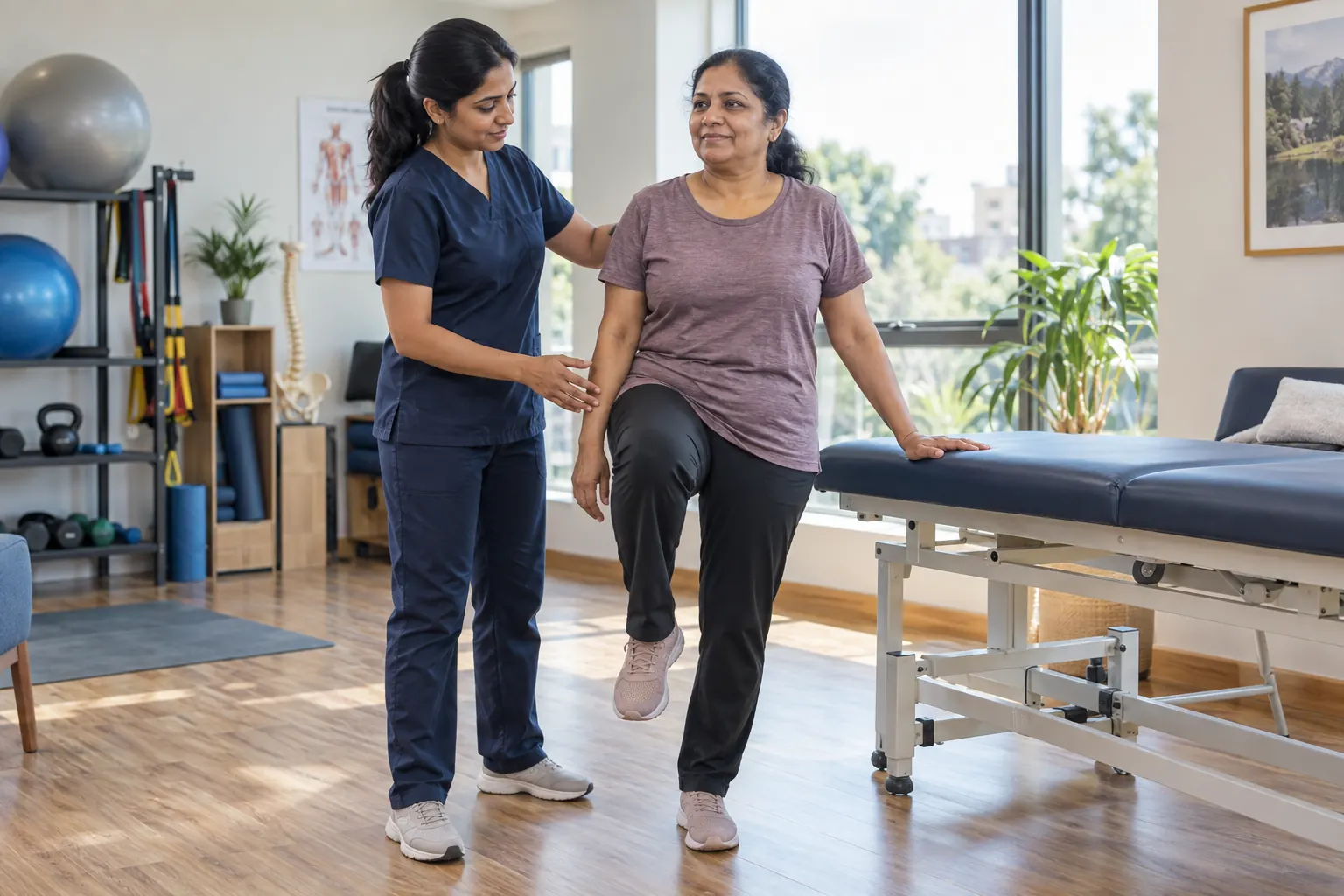
A connected care plan.

Movement, in real life
What would you like your day to include again?
Perhaps it is the morning walk you have begun to avoid. The stairs at work. Or cooking a meal without repeatedly stopping. These everyday moments give the care conversation a purpose.
My back or neck shapes my working day
Describe when discomfort appears, what your work involves and which tasks have become difficult. The assessment can help identify relevant movement, practical adaptations and any need for medical review.
Stiff or painful joints make me hold back
Talk about the activity you miss and what concerns you about trying it. Agree a starting point with your physiotherapist, then use that same activity to discuss progress over time.
I need a plan that fits the rest of my life
Work, caregiving and the cost of care all matter. Your coach helps turn the agreed plan into a routine you can discuss, practise and adjust with the team.
The starting point
Make everyday movement a meaningful part of your care plan.
Adults with ongoing back or neck discomfort, joint pain, stiffness or osteoarthritis who want help with daily function. Begin with an assessment to understand the concern and whether physiotherapy, medical review or specialist care is appropriate.
Make it personal.
02 / Your planKeep it connected.
03 / Your next stepReview it together.
What would support look like for you?
A clinician guides care. A coach helps you carry the plan into daily life. Your centre agrees the support available.
Care that fits your everyday life.
A shared plan, shaped around the person and reviewed by their clinician.

Where would you like to begin?
Understand the difficult movement+
Talk about the things pain interrupts: sitting through work, reaching a shelf, climbing stairs or sleeping comfortably. Assessment considers your symptoms, movement and medical history, rather than assuming every ache has the same cause.
Build a movement plan you can use+
A physiotherapist can select mobility, strength and activity practice around your needs. Agree a starting level and how to respond when symptoms change. You do not need to arrive fit or follow a fixed exercise routine.
Carry it into an ordinary week+
Your coach helps you organise the agreed routine around work, family and energy. Discuss breaks, confidence and practical barriers, with nutrition or psychological support considered when relevant.
What would you like to know next?
What would the first steps be?↗
- Tell us what has changed
Bring your concerns and relevant medical records. The first assessment identifies what needs further investigation and what can be addressed through supported movement.
- Choose an everyday goal
Agree a useful starting point with your care team. It might be a shorter, more comfortable walk or finding a manageable rhythm during the working day.
- Practise with guidance
Learn the activities selected for you, then work with your coach on fitting them into daily life. Report worsening or unfamiliar symptoms so the plan can be reviewed.
- Look at what is becoming possible
Review the task you chose alongside relevant clinical findings. Adjust the plan, address barriers or arrange specialist input when needed.
How would progress be reviewed?↗
Your clinician chooses measures relevant to your goals. Examples may include:
- How you manage a chosen task, such as stairs, reaching or a walk
- Movement, strength and activity tolerance when appropriate
- Pain interference, confidence and the effect on your daily routine
Who could support me?↗
- Treating physician, with orthopaedic or rheumatology input when indicated
- Physiotherapist
- Coach for practical routines and follow-through
- Occupational therapy, nutrition or psychological support according to need
Your centre confirms which professionals are involved and how you will meet.
How does my coach help me keep going?↗
Your coach helps turn the agreed plan into everyday action: manageable goals, workable routines and conversations about what is getting in the way. You agree how to stay in touch and bring questions back to the care team. Medical decisions remain with your clinician.
Meet the coaching roleCan we discuss money or work pressures?↗
Money worries can be part of the wellbeing conversation, including care costs, household responsibilities and pressures at work. Your coach can help you organise priorities and explore practical money habits. This is financial wellbeing education, not advice on financial products.
Explore financial wellbeing supportHow does this fit my existing care?↗
Some joint or back problems need specialist investigation or surgical assessment. The team can help clarify that next step. If hospital treatment is needed, continuing support should follow the treating team’s instructions; a rehabilitation programme must not delay necessary medical care.
Our referral approachAn interactive service guide. Your choices stay on this page.
Your questions, answered.
Do I need a diagnosis before making an enquiry?
No. You can describe what is difficult and ask about an assessment. The team will explain whether an appropriate clinician or physiotherapist can assess you, and whether medical investigation should come first.
What if I am worried that movement will hurt?
Say so at the assessment. Your physiotherapist can discuss a suitable starting point and how to respond to symptoms. The goal is an individual plan you understand, with review when discomfort or function changes.
Can joint pain and weight concerns be considered together?
Yes. Bring both concerns to the conversation. Movement and nutrition support can be coordinated around your clinical needs and preferences, with everyday function among the goals. You do not have to lose weight before asking for help.
Clinical perspective
This pathway does not promise pain-free movement or avoid the need for surgery. New back pain with bladder or bowel changes, numbness around the groin, or weakness in both legs needs emergency assessment. Your centre confirms suitability, professional input and available support.
Start a conversation
Start with your story.
Find your local centre and discuss what support may be right for you.